There is a particular kind of fatigue that sets in for anyone who has spent serious time around sports prediction sites and gambling-strategy apps. The pitch is almost always the same: a confident voice, a glossy interface, a parade of winners, and almost no accounting of the losers. The losses, when they come, tend to vanish from the homepage.
Triple Seven Suite, a product line from the Indiana consultancy Gurchiek Consulting LLC, is staking its launch on a different posture. Its marketing materials lean hard into the language of transparency - explainable models, published win/loss records, public leaderboards - and frame the brand less as a tipster service than as an analytics platform for people who want to see the math.
Whether the product delivers on that posture is, of course, a question only time and a paying user base can answer. But the framing itself is unusual enough in this corner of the consumer software market to merit a closer look.
The Suite, In Brief
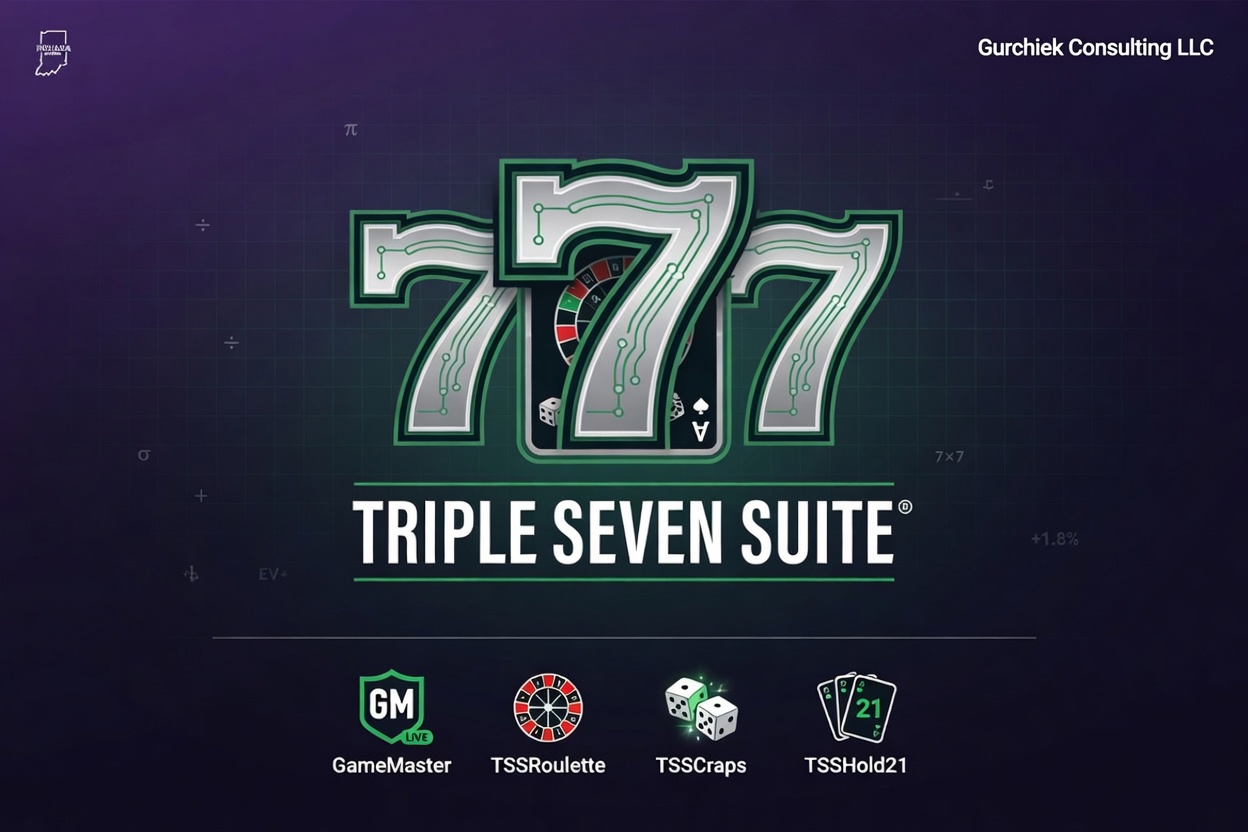
Triple Seven Suite - abbreviated TSS in the company's own materials - is positioned as a collection of four tools rather than a single app. Only one of them, GameMaster, is currently available. The other three - TSSRoulette, TSSCraps, and TSSHold21 - are listed on the company's homepage as "coming soon," with no public launch dates attached.
The umbrella concept is what the company calls "player advantage": software meant to give the individual gambler the kind of analytical resources that, in another era, were the province of professional bettors and casino-side quants. It is a category that has expanded sharply as sports betting has been legalized across most of the United States, and as the once-clear line between fantasy sports tooling and outright handicapping has blurred.
GameMaster: The One That's Actually Live
GameMaster, which runs on its own subdomain at gamemaster.triplesevensuite.com, is the only tool in the suite that users can sign up for today. It is described as an "AI-powered sports predictions" platform and is currently labeled as being in beta - a detail worth flagging, since beta status typically means features, accuracy, and pricing are all subject to change.
The product's headline claims are aggressive. The marketing page advertises 94 percent prediction accuracy over the previous season, coverage of more than 200 leagues and competitions, ten million data points processed daily, and live score updates in under sixty seconds. Those figures are presented without methodology - there is no public breakdown, on the page itself, of what counts as a "prediction," what sports the 94 percent figure was computed across, or whether the accuracy rate is weighted by confidence or treated as a flat hit-rate. Prospective users hoping to evaluate the model's claims will want to spend time on the leaderboard and historical-results pages the company says it publishes.
What is on offer feels, on paper, like a relatively standard sports-analytics stack with a few choices that distinguish it from the broader field. GameMaster pairs each prediction with a confidence score on a 0-to-100 scale and, according to the features page, surfaces the top factors driving that score - recent form, head-to-head records, injuries, weather, and so on. The company describes this as "explainable AI" and pitches it as a deliberate counter to the black-box approach common in this category.
Coverage spans the major U.S. leagues - NFL, NBA, MLB, NHL - alongside global soccer and MMA. Live scores, play-by-play data for supported leagues, and historical game logs round out the data side. On the social side, GameMaster offers a public leaderboard of user predictions, individual win/loss records visible to other members, and what the company markets as "leaderboard culture" - the notion that putting picks on the record, in public, keeps everyone honest.
There is a free tier requiring no credit card, with paid Pro and Elite tiers gated behind features like smart alerts and broader sport coverage. Pricing details sit on a separate page on the GameMaster site.
The company's about page is unusually candid about the project's origins, describing GameMaster as having started as a side project born out of frustration with prediction sites that "either buried the data in noise or published hot-take picks with zero accountability." The stated mission - "give every sports fan access to the same analytics edge that used to require a Bloomberg terminal and a stats PhD" - is the kind of line that tends to read as either earnest or aspirational depending on how the product ultimately performs.
What's Coming, and What to Make of It
The remaining three tools in the suite are, for now, mood boards more than products. But the categories they target reveal something about where Gurchiek Consulting sees the gap.
TSSRoulette is described as a roulette analysis platform for pattern tracking, bankroll management, and "data-driven" play. Roulette is, mathematically, a game in which the house edge is fixed and known and pattern-finding is a famously seductive trap; whatever TSSRoulette ends up doing, the most useful tool in this category is usually rigorous bankroll discipline rather than pattern hunting. The marketing copy nods to both.
TSSCraps is pitched as a craps strategy toolkit with optimal-bet guides, dice outcome tracking, and session management. Craps has a genuine analytical surface - different bets carry dramatically different house edges, and disciplined bet selection is a real, mathematically defensible form of edge-minimization. A well-built tool here could plausibly help recreational players avoid the worst bets on the layout.
TSSHold21 is the most conventional of the forthcoming tools: a blackjack decision engine offering basic strategy, card-counting assistance, and real-time expected-value tracking. This is well-trodden territory - basic strategy charts and counting trainers have existed for decades - and the question for TSSHold21 will be whether it offers anything meaningfully better than the dozen-plus apps already in the App Store.
The common thread across the table-game trio is the framing of these games as analytical problems rather than entertainment. That is both the appeal and the risk of the category: tools that take gambling seriously can help disciplined players, but they can also encourage the magical thinking that an app can convert games of fixed negative expectation into positive ones.
The Bigger Picture
Triple Seven Suite arrives at a moment when the consumer sports-betting and gambling-tools market is unusually crowded and unusually unregulated. Dozens of subscription services promise picks, predictions, and edges. Most of them publish their wins loudly and their losses quietly. A small but growing subset has begun pitching transparency itself as the product.
TSS is firmly in that latter camp, at least rhetorically. The company commits, in writing, to publishing its model's full win/loss record by sport, league, and week. It promises explainability rather than oracle pronouncements. And it markets a leaderboard system that puts user predictions on a public ledger.
These commitments, if honored, would meaningfully differentiate the platform. They would also be relatively easy to verify or falsify once the product has been live long enough to accumulate a track record. That is the trade-off the company has chosen to make. It will be worth checking back, in six months or a year, to see whether the published numbers match the marketed accuracy - and whether the three "coming soon" boxes have anything inside them.
For now, GameMaster is the only piece of the suite a curious reader can actually try. A free account is the cost of admission. The rest is, in every sense of the word, beta.
Triple Seven Suite is a product line of Gurchiek Consulting LLC. The company can be reached through the contact form at triplesevensuite.com.